

Do binaural beats work? An evidence scorecard by outcome
The honest answer depends entirely on what you want them to do. Strong evidence for anxiety before surgery, weak for everyday calm, contested for the entrainment mechanism itself.
“Do binaural beats work?” has no single answer, and every page that gives you one is doing you a disservice. They work well for one thing, probably help with a second, do little measurable for a third, and the mechanism everyone cites to explain all of it is still contested after fifty years. Here is each outcome with its own grade.
The short version: the best-supported use is reducing anxiety in patients before and after surgery, where a meta-analysis of fifteen randomised trials found a large effect. For healthy people listening at home for calm, focus or sleep, the evidence is much thinner than the marketing suggests, and in several studies the beats themselves added nothing to simply listening to pleasant audio.
Last reviewed 19 October 2026. This page is updated as new studies are graded into our research library.
First, what a binaural beat is
Play a 440 Hz tone into your left ear and a 450 Hz tone into your right, through headphones, and you hear a slow 10 Hz pulsing that is not present in either signal. It exists because your brainstem compares the timing of the two ears. That comparison is real and well mapped: in 1979 Kuwada, Yin and Wickesberg recorded single neurons in the cat inferior colliculus firing in step with the beat, which remains the clearest physiological account of why you perceive the pulse at all. Their paper was about how we locate moving sounds, which is what a beating pair of tones imitates.
The term “binaural beats” entered wide circulation through Gerald Oster’s 1973 Scientific American article, which is the citation almost every product page uses. We read it. Oster was writing about hearing research and proposed binaural beats as a diagnostic tool, for detecting neurological problems and possibly hormonal state. There is nothing in it about relaxation, focus, sleep or altered states, and no therapeutic claim at all. Those arrived later.
The scorecard
| What you want them to do | Our grade | What the evidence actually shows |
|---|---|---|
| Reduce anxiety before and after surgery or a procedure | strong |
A meta-analysis of 15 randomised trials, 1,047 patients, found a large reduction, and beats still beat ordinary audio |
| Reduce pain around a procedure | moderate |
Moderate reductions in the same meta-analysis; consistent with the wider music-and-pain literature |
| Reduce everyday stress in healthy people | weak |
Small studies without the control condition needed to separate the beats from the pleasant audio carrying them |
| Improve attention or focus | mixed |
One well-designed study found a benefit in 1 of 16 parameter combinations, and no effect on vigilance over time |
| Improve memory | no grade yet | Pooled analyses include memory outcomes, but we have not yet graded a memory study into the library |
| Improve sleep | no grade yet | We have not yet graded a sleep trial. Treat vendor claims here as unsupported by us, not as checked |
| Pull your brainwaves into step (“entrainment”) | mixed |
A systematic review of 14 EEG studies found 5 supporting it, 8 contradicting it and 1 mixed |
Anxiety around surgery and procedures: strong
This is the one place the evidence is good, and it is the use almost no consumer page talks about. Xiong and colleagues pooled fifteen randomised trials through December 2024 in which surgical patients listened to binaural beats. Against silent or blank audio, anxiety fell by a standardised mean difference of about 1.4 across fourteen trials and just over a thousand patients. Systolic blood pressure and heart rate dropped by a few points.
The comparison that matters more is against ordinary, non-beat audio, because that is where the “it is just the music” objection lives. Beats still came out ahead on anxiety and on pain there, though the anxiety result is less certain.
Two honest caveats. Heterogeneity in the pooled anxiety analysis was above 90 percent, meaning the trials disagree substantially about how big the effect is even while agreeing on its direction. And perioperative patients are a specific, highly anxious group having a short, acutely stressful experience. That does not transfer automatically to a Tuesday evening at home. We would move this grade to moderate if a later review with lower heterogeneity reports smaller effects.
Pain: moderate
The same meta-analysis found moderate reductions in postoperative pain. Garcia-Argibay and colleagues’ earlier meta-analysis of 22 studies (Psychological Research, 2018) also pooled analgesia alongside cognition and anxiety, reporting an overall medium effect of g = 0.45 across 35 effect sizes.
Worth knowing: music without any beats in it performs respectably on procedural pain too. In a randomised trial of 186 adults having arterial blood gas sampling, plain music reduced pain by about one point out of ten, which is roughly what the meta-analytic estimate for music predicts. If you are choosing something to listen to during a painful procedure, the evidence supports listening to something. It does not clearly single out beats.
Everyday stress and calm: weak
Here the studies start failing in a specific, repeated way: they leave out the control condition that would tell you whether the beats did anything.
Yang and colleagues had 65 students listen to twenty minutes of nature sounds carrying beats at 6 Hz, 10 Hz and 25 Hz. Blood pressure and heart rate fell after all three, and there was no difference between them. The authors read that as beats reducing anxiety at any frequency. The absence of any difference between frequencies points the other way: twenty minutes of sitting quietly with nature sounds in headphones is calming, and the beat frequency may not be doing the work. There was no beats-free condition to check.
Venkatesan and colleagues randomised 308 people to music with slow monaural beats woven in, the same beats alone, or a plain tone. Only the beats-in-music group became less anxious, by a medium-sized amount. The beats-alone group did not, and reported less energy afterwards. The design had no music-without-beats arm, so the study shows that pleasant music with beats calms people, that beats by themselves do not, and that the beats’ own contribution is untested.
The one well-controlled trial pointing the other way is a sham-controlled study of 10 Hz beats in 30 men in residential opioid treatment. Its sham was properly matched and the outcome assessor was blinded, which is better than most of this field manages. Its effect sizes are also implausible: a partial eta-squared of 0.75 on post-treatment anxiety attributes three quarters of the remaining variance to which audio track someone heard, which exceeds what psychotherapy achieves. With fifteen people per arm, that is more easily explained by chance or by the control group’s lower starting score. It is a preprint, registered retrospectively. We grade the method moderate and treat the size of the effect as unconfirmed.
Attention and focus: mixed
The focus-music market is large and the evidence under it is slim. Melnichuk, Cooper and Hawk ran the study the field needed, varying the settings deliberately rather than picking one: eighty students across sixteen combinations of beat frequency, carrier tone, timing and background noise, with EEG checking whether the brain followed the beat.
EEG entrainment did occur, varying by setting. Task performance improved in exactly one of the sixteen combinations (gamma beats over a low carrier with white noise underneath). No combination stopped the normal decline in vigilance over time, which is what “sustained attention” means. The authors concluded that beats may influence some aspect of cognition other than sustained focus.
Earlier EEG work points the same direction. Gao and colleagues played four beat frequencies to thirteen adults and stated plainly that no clear entrainment effect was identified, though connectivity measures shifted. Garcia-Argibay’s pooled estimate does include cognitive outcomes and is positive overall, which is why this sits at mixed rather than lower.
Memory and sleep: no grade yet
We will not grade what we have not read. Memory outcomes appear inside pooled analyses, and some individual studies report impairment rather than benefit, but our library currently holds no graded memory study and no graded sleep trial. Both are in our queue. Until then, treat claims in these two areas as unchecked by us. A page that tells you binaural beats are proven for sleep is going beyond what anyone has demonstrated, but our saying so is not the same as our having graded the trials.
Does entrainment actually happen? mixed
This is the mechanism every product claim rests on, and it is the least settled part of the picture.
Ingendoh, Posny and Heine systematically reviewed fourteen EEG studies of binaural beat stimulation (PLOS ONE, 2023). Five reported results consistent with the brainwave entrainment hypothesis, eight contradicted it, and one was mixed. The studies were so heterogeneous in implementation, design and analysis that the authors concluded the field needs standardisation before reliable conclusions are possible.
There is a deeper measurement problem. Duecker and colleagues’ methods review explains that a brain producing a fresh evoked response to each beat generates a signal that can look identical to a true oscillation being pulled into step. Separating them requires tests most studies do not run, such as checking whether the rhythm persists after the sound stops. A peak in the EEG at the beat frequency is not, by itself, evidence of entrainment in the strong sense.
Two recent results sharpen this. Dos Anjos and colleagues found that white noise also raised gamma power, so any sustained sound moves the EEG somewhat. And in a 2026 study combining beats with visual flicker, the apparent gamma increase at 40 Hz vanished once the rhythmic part of the signal was separated from the broadband background. That is a measurement distinction a great many “40 Hz audio” claims depend on.
The 1970s work adds a useful boundary. When Gerken and colleagues recorded the brainstem’s frequency-following response to tones in one ear and in both, the binaural response was simply the sum of the two monaural responses. Two phase-locked responses sitting side by side is not a brain following a beat.
What we do not know
- Whether the beats add anything to the audio carrying them, in healthy listeners. The trials that would answer this (identical music with and without beats) are mostly not run.
- Whether the beat frequency matters. The study that compared three frequencies head to head found no difference between them.
- Whether any effect lasts. Almost everything here is a single session or a few weeks, with no follow-up.
- Whether entrainment in the strong sense occurs at all, as distinct from an evoked response to each beat.
- Who this works for. Samples are overwhelmingly students and surgical patients.
If you use them anyway
Nothing here is medical advice, and none of it is a reason to treat a condition with sound instead of seeing a clinician. With that said, a few things follow from the evidence rather than from the marketing.
You need headphones: a binaural beat is created by comparing the two ears, so it does not survive a speaker. Keep the volume moderate; no study here tested loud listening, and ordinary hearing-safety limits still apply. The strongest results used exposure before, or before and during, a task rather than only during it, and longer exposures did better than short ones. If what you actually want is to feel calmer, the evidence supports audio you find pleasant at least as well as it supports beats specifically, so picking music you like is a defensible choice.
One point of context, since it is often framed as a fringe activity: in the Global Drug Survey 2021, 5.3 percent of 30,896 respondents across 22 countries reported using binaural beats to experience altered states, most commonly to relax or fall asleep. This is a mainstream behaviour with a thin evidence base, which is a different problem from a fringe one.
Sources
Graded summaries in our library:
- Xiong and colleagues (2025), binaural beats for perioperative anxiety and pain: a meta-analysis of 15 trials
strong - Soleimanifar and Mansouriyeh (2026), 10 Hz binaural beats in opioid rehabilitation
moderate - Melnichuk, Cooper and Hawk (2025), which beat settings entrain the brain, and do they help attention?
mixed - Venkatesan and colleagues (2025), monaural beats inside music reduce anxiety; beats alone do not
mixed - Yang and colleagues (2025), theta, alpha and beta beats all lowered blood pressure, and equally
weak - Dos Anjos and colleagues (2024), isochronic-style tones shift EEG power more than gamma binaural beats
moderate - Duecker and colleagues (2024), is “entrainment” what the brain is actually doing? A methods review
mixed - Ávila and colleagues (2026), binaural beats added to visual flicker
mixed - Gao and colleagues (2014), alpha-frequency entrainment and attentional control
mixed - Aparecido-Kanzler and colleagues (2021), binaural beats and isochronic tones: a literature review
moderate - Prakash and colleagues (2026), music during arterial blood gas sampling
moderate - Oster (1973), auditory beats in the brain
weak - Kuwada, Yin and Wickesberg (1979), cat inferior colliculus neurons and binaural beats
weak - Gerken and colleagues (1975), frequency-following responses to monaural and binaural stimuli
weak
Not yet in our library:
- Garcia-Argibay, Santed Germán and Reales Avilés (2018). Efficacy of binaural auditory beats in cognition, anxiety, and pain perception: a meta-analysis. Psychological Research. doi:10.1007/s00426-018-1066-8
- Ingendoh, Posny and Heine (2023). Binaural beats to entrain the brain? A systematic review. PLOS ONE. doi:10.1371/journal.pone.0286023
- Barratt and colleagues (2022). Who uses digital drugs? An international survey of “binaural beat” consumers. Drug and Alcohol Review. doi:10.1111/dar.13464
How we assign these grades is set out on our methodology page.
Related articles
The Science and Practice of Sound in Meditation: From Ancient Chanting to Modern Brainwave Entrainment
From Tibetan singing bowls and chant to gong baths and binaural beats: how sound is used in meditation, and what research says about why…

The Schumann Resonance: Separating Fact from Fiction
The Schumann Resonance is a natural phenomenon that has captured the interest of scientists and enthusiasts alike. However, it is often…
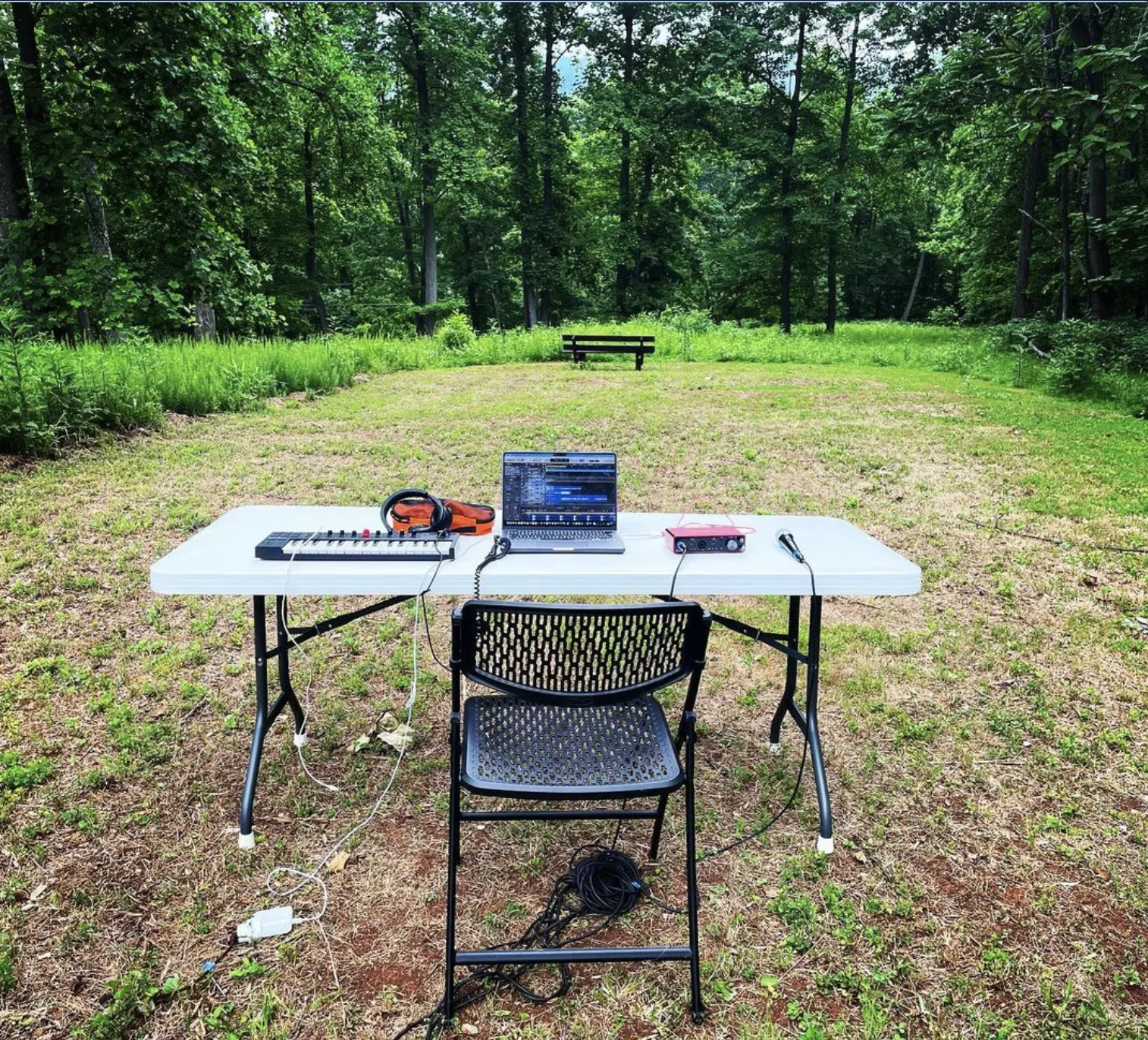
The Monroe Institute Creation Station
In the spring of 2022, The Monroe Institute (TMI) in West Virgina, USA, ran an experiential course called Creation Station. The purpose of…